


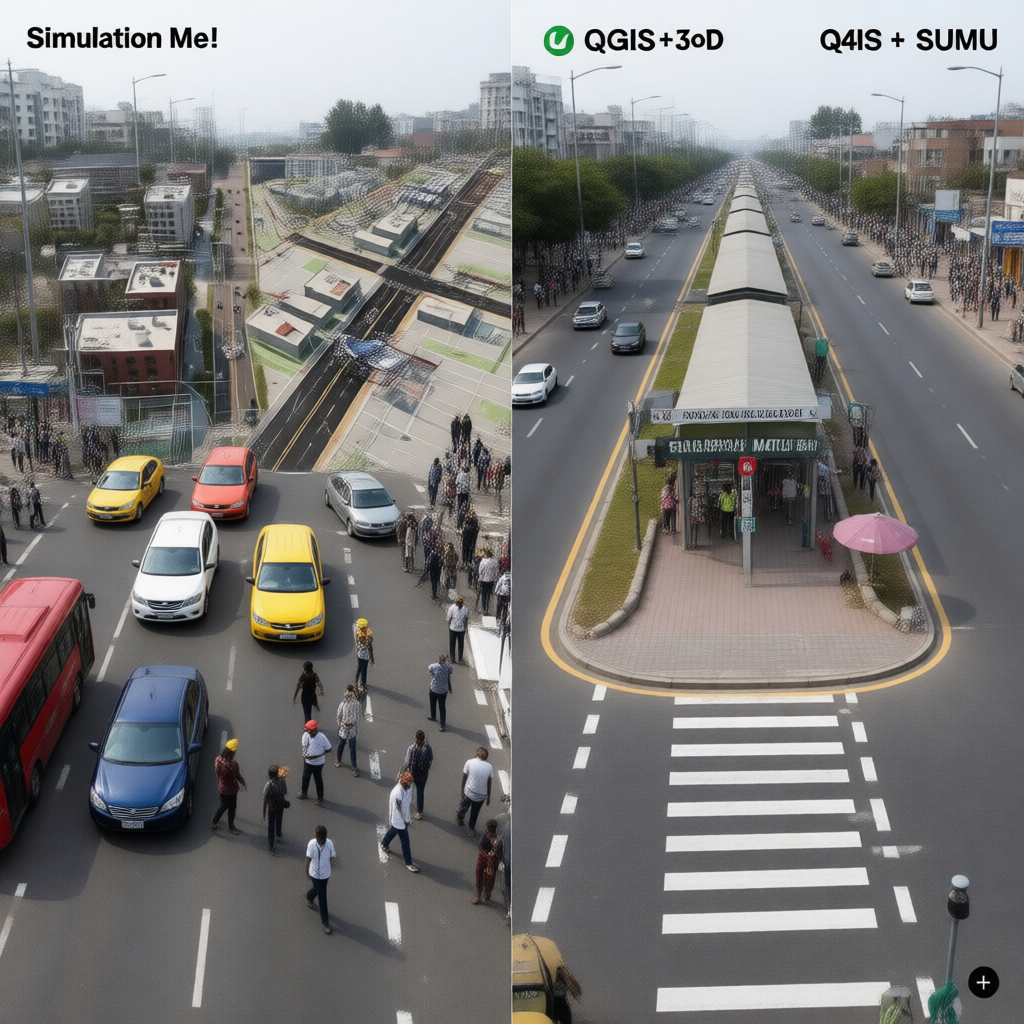
Thika Road is more than a highway—it’s a lifeline for Nairobi’s economy and a daily reality for hundreds of thousands of commuters. A recent assessment of a 4-kilometer stretch between Roysambu and Garden City revealed that uncontrolled mid-block crossings, chaotic matatu stops, and poorly timed signals were creating both congestion and safety risks. The solution didn’t involve road widening. Instead, phased pedestrian crossings with refuge islands, formalized lay-bys, and signal synchronization—developed in consultation with local SACCOs and residents—led to a 35% drop in pedestrian-vehicle conflicts within six months.
What made the difference was treating the corridor not as a traffic pipe, but as a shared public space. By observing how people actually moved—where they crossed, where they waited, where they felt unsafe—the design responded to real behavior, not just theoretical models. The result was smoother bus operations, safer walking conditions, and a corridor that began to feel more human.