
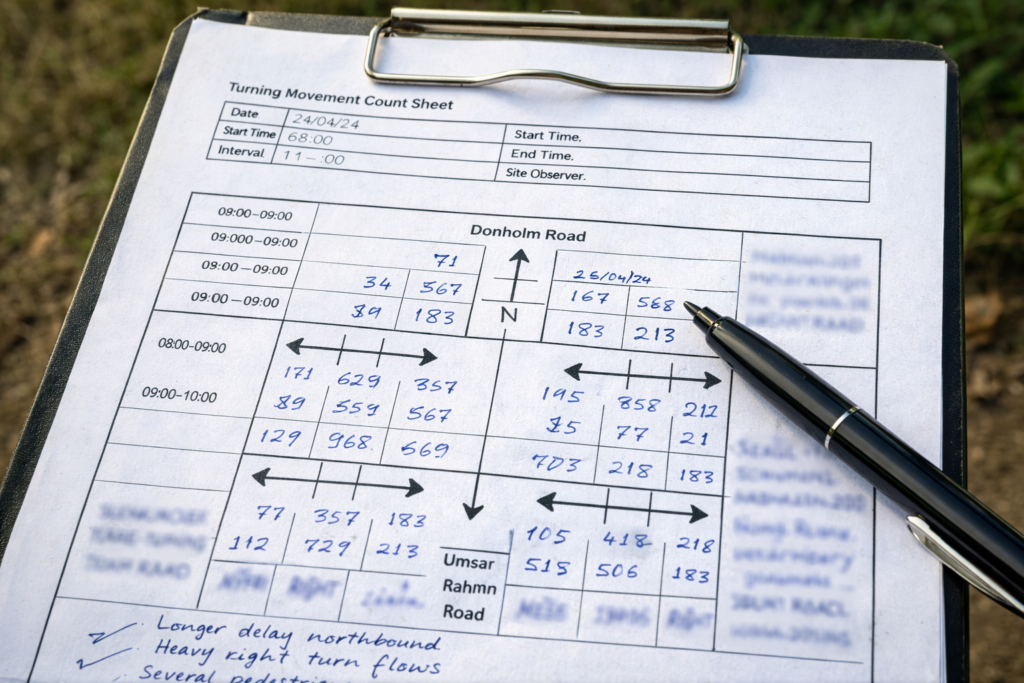
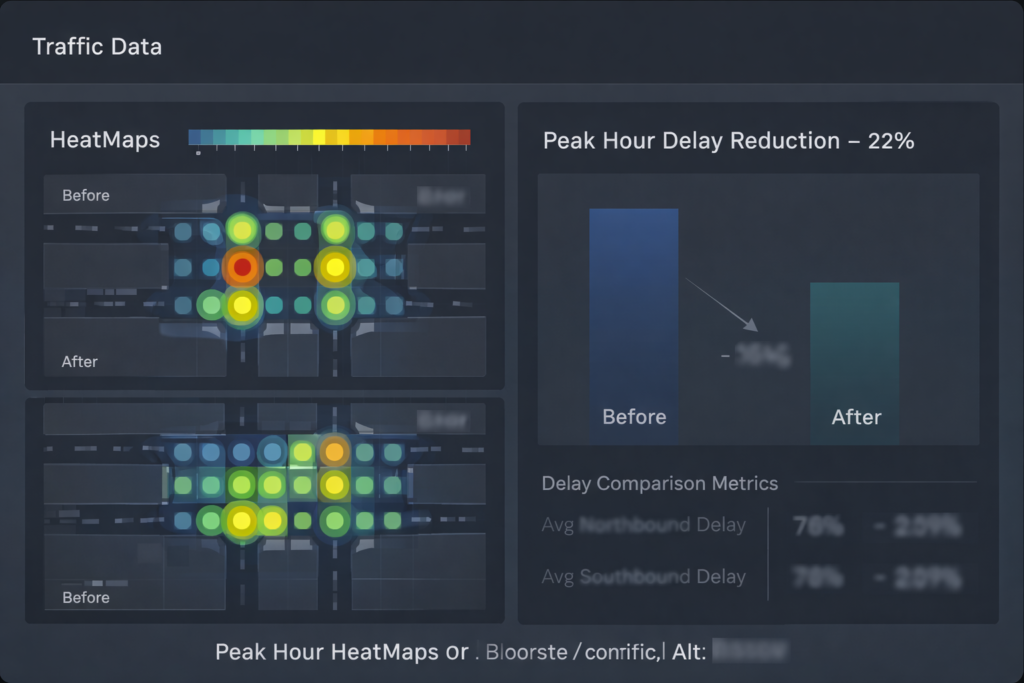

In a region where traffic congestion often feels inevitable, turning raw observations into actionable intelligence is where real impact begins. On a recent assignment near JKIA, detailed turning movement counts and video-based trajectory analysis revealed that peak-hour weaving between arrivals and local traffic wasn’t just causing delays—it was creating recurring near-miss hotspots. By refining signal timing and clarifying lane assignments, average delay dropped by over 20%, and informal U-turns decreased significantly.
The lesson? Data isn’t valuable just because it’s collected—it’s valuable when it’s interpreted through the lens of local behavior. In East African cities, where informal transit, pedestrians, and delivery riders share space unpredictably, engineering solutions must reflect that complexity. Short-duration studies, when paired with on-the-ground validation, can deliver outsized returns without requiring major infrastructure investment. The goal isn’t just smoother flow—it’s safer, more predictable movement for everyone on the road.