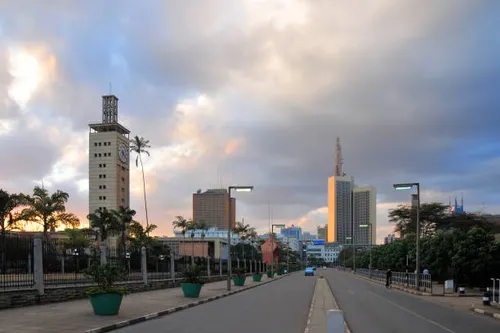
The extreme flooding that struck Nairobi in March 2026 was more than a weather anomaly—it was a stress test of urban infrastructure under climate volatility. Within just 24 hours, the city recorded 130–180mm of rainfall, equivalent to its entire monthly long rains compressed into a single day. Roads were submerged, vehicles swept downstream, drainage systems overwhelmed, and thousands displaced. For engineers, this event underscored a stark reality: our design standards must evolve as rapidly as the climateitself.
Lessons from the 2026 Floods
Outdated Drainage Systems
Much of Nairobi’s drainage network was built decades ago, when rainfall was more predictable and the population less than half its current size. Systems designed for 100mm events buckled under intensities nearly double that threshold. This mismatch between design assumptions and climate realities exposes a critical vulnerability.
Integrating Nature-Based Solutions
Resilient roadway design must go beyond concrete and asphalt. Engineers can embed green infrastructure to reduce peak runoff and restore natural hydrological balance:
- Permeable pavements in parking and pedestrian zones
- Retention and infiltration basins near major arterials
- Green roofs and terraces on adjacent developments
- Protection and restoration of natural drainage corridors
By working with nature rather than against it, cities can absorb shocks more effectively.
Respecting Hydrological Systems in Transport Planning
Roadway alignment must acknowledge the city’s waterways:
- Preserve riparian buffers
- Avoid construction within floodplains unless elevated
- Rehabilitate blocked or degraded waterways
Ignoring these principles risk repeating the failures witnessed in March.
Re-Engineering Roadway Design
To withstand future extremes, engineers must upgrade and adapt:
- Upsize culverts and roadside channels
- Redesign road gradients to prevent ponding
- Expand stormwater conveyance and retention systems
These interventions ensure that roads remain passable even during high-intensity storms.
Climate-Informed Engineering: Planning for 2050, Not 1990
Regional climate studies show that warming in East Africa is increasing the frequency of short, violent storm events. Designing for resilience requires:
- Adopting higher flood return periods
- Using updated climatic projections in hydrological models
- Considering compound risks such as simultaneous flooding and infrastructure failure
- Building redundancy and adaptability into every design
At Glince Ltd, we view climate-resilient roadway design as both a technical responsibility and a social duty. The March floods remind us that adaptive engineering saves lives, protects investments, and safeguards urban mobility. As climate variability intensifies, resilient roads are not optional; they are the backbone of climate-ready cities.
Cruise Nyakongo
Engineering Technician